
How To
How to care for a wooden cutting board
First-use preparation, everyday washing and drying, oiling, odour and stain removal, and the signs that a board has reached the end of its working life.
Plastic boards are the everyday workhorse — easy to wash, light to move and kind to knife edges. Clean them properly, keep raw meat separate, and replace them before the scoring gets deep.
By Cookin · 24 September 2026 · 4 min read
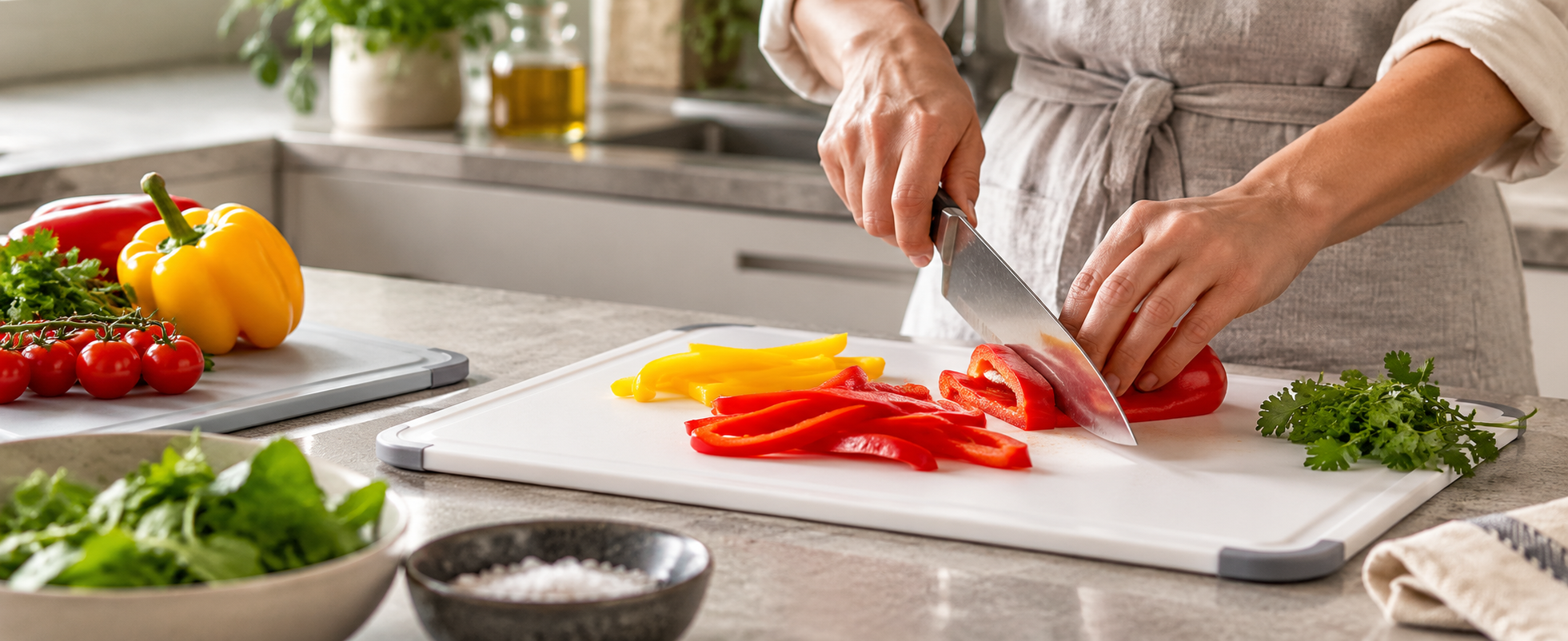
Most kitchens need at least one plastic board alongside a wooden one. Polyethylene and polypropylene boards are light, non-porous on the surface, affordable and — for many — dishwasher-safe, which makes them the practical choice for raw meat, poultry and fish. They are not maintenance-free, though: knife cuts become grooves, and grooves hold food and bacteria. This guide covers plastic and composite boards and flexible chopping mats. Materials and heat tolerances vary, so where your board's instructions differ, follow the manufacturer.
The most important habit with any board is separation. Use one board for raw meat, poultry and fish, and a different one for bread, fruit, vegetables, cheese and anything that will not be cooked. Colour-coded sets make this easy to stick to; if your boards are all one colour, mark one for raw meat and keep it for that alone. If you have only one board, prepare ready-to-eat food first, then raw meat, then wash the board thoroughly before using it again.
After raw meat, poultry or fish, clean the board, then the knife, the counter and your hands. Wash the sponge or brush too, or it simply moves bacteria to the next surface.
Many plastic boards are dishwasher-safe, and a hot cycle is an effective way to clean them. Check the label first. Stand the board upright in the bottom rack so water reaches both sides and it does not bend over the tines, and avoid very high-heat or drying settings if your board is thin — heat is what warps plastic. Wooden, bamboo and boards with wooden or rubber parts should never go in the dishwasher.
For an occasional deeper clean — after raw chicken, or if the board has been stored damp — wash it first, then soak or wipe it with a diluted household bleach solution made up according to the bleach label, and rinse thoroughly with clean water. Never mix bleach with vinegar, ammonia or other cleaners. Neat bleach and abrasive powders roughen the surface over time, so keep this as an occasional step rather than a daily one.
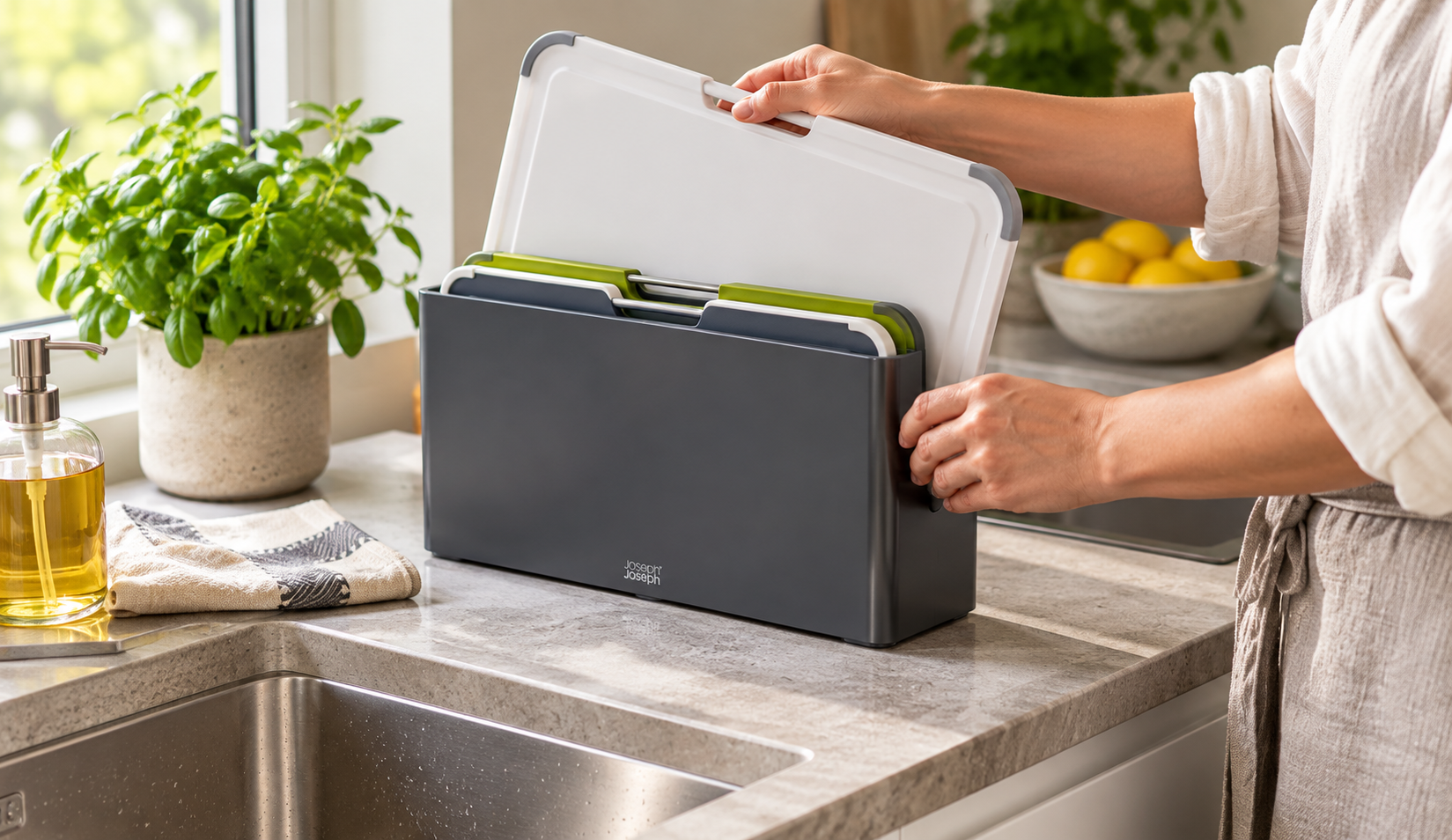
Moisture trapped between stacked boards is where smells and mould start, particularly in humid coastal kitchens. Store boards upright in a rack or holder, or lean them against the wall with a gap behind, and never put them away wet. Keep them away from the stove, kettle and toaster, where heat can warp them.
Plastic boards are not forever. Replace a board when knife grooves are deep enough to catch a fingernail or will not come clean with a brush, when it stays stained or smelly after cleaning, when it has warped or cracked, or when it has been scorched. A board used daily for raw meat will usually need replacing sooner than a vegetable or bread board. Flexible chopping mats wear faster still and are cheap to replace.
Where to look next
How To
First-use preparation, everyday washing and drying, oiling, odour and stain removal, and the signs that a board has reached the end of its working life.
How To
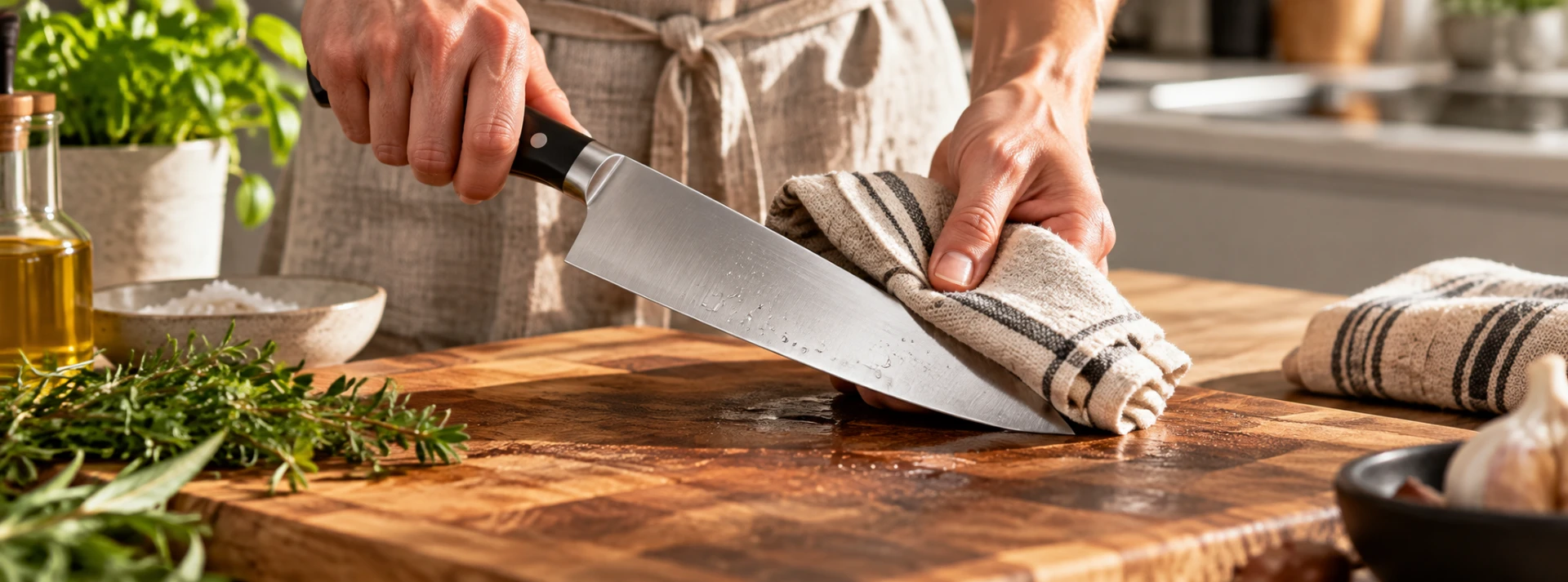
Washing, drying, cutting surfaces, safe storage, rust and stains, and the habits that protect an edge — a practical daily-care guide for kitchen knives.
How To
Learn when to hone or sharpen a kitchen knife, how to use a honing rod safely, which common habits damage an edge, and when to call a professional.