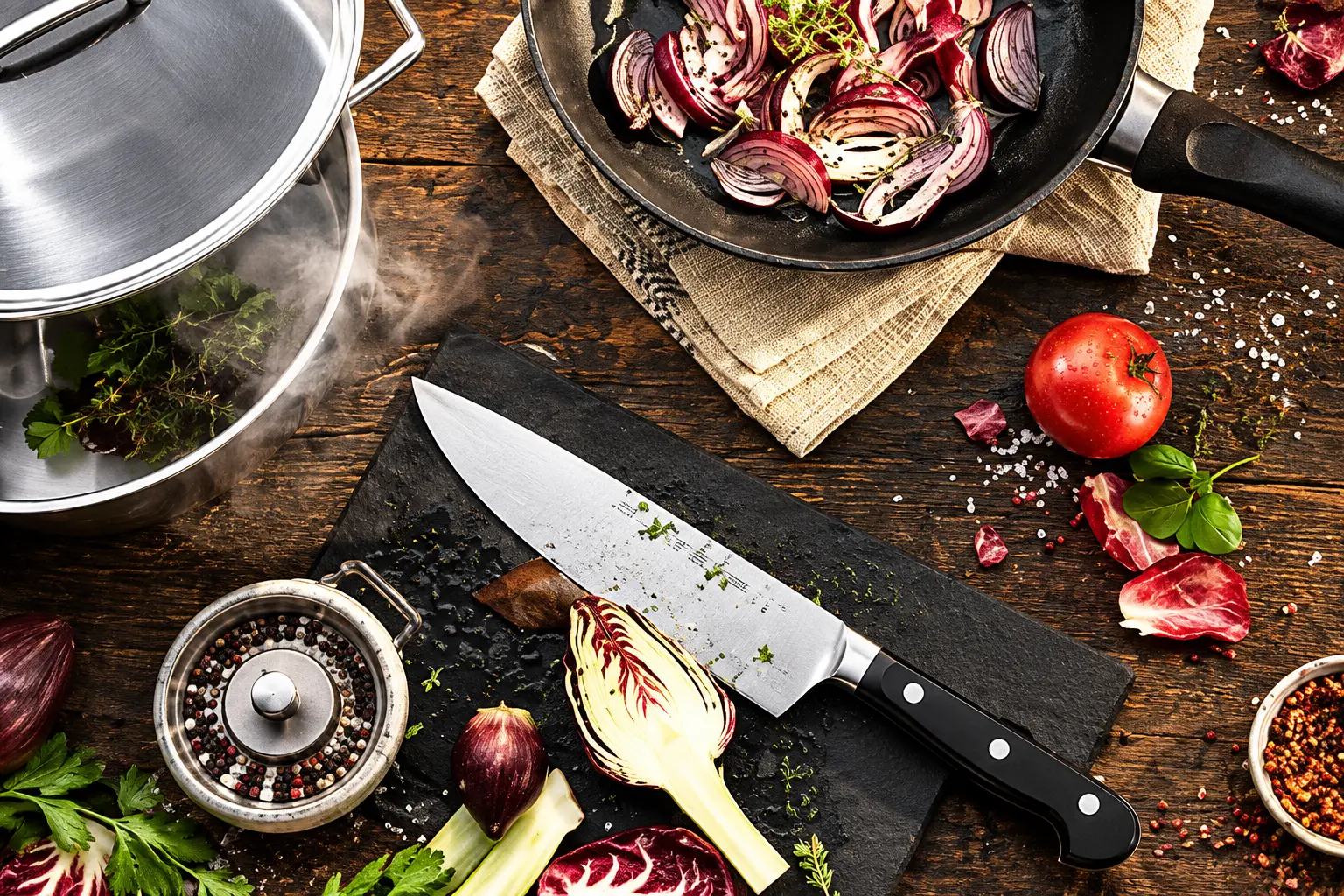
Most knives are not worn out by cooking. They are worn out by dishwashers, drawers, glass boards and wet sinks. A few daily habits keep a good knife good for decades.
By Cookin · 24 September 2026 · 5 min read
Sharpening gets the attention, but daily care decides how often a knife needs it — and whether the blade and handle survive long enough to matter. This guide covers everything between sharpenings: washing, drying, what to cut on, how to store knives, and how to deal with spots, stains and chips. It is general guidance for most home kitchen knives. Steels, handles and finishes differ, so where your knife's own care instructions say something different, follow the manufacturer.
Wash by hand, straight after use
Rinse and wash the knife as soon as you finish with it, especially after acidic or salty foods — tomatoes, citrus, onions, pickles and cured meat all mark carbon and some stainless steels if left on.
Use warm water, a little mild dishwashing liquid and a soft sponge or cloth. Wipe from the spine towards the edge, never along the edge with your fingers.
Avoid steel wool and harsh scouring pads on the blade; they scratch the finish and can dull the edge.
Never leave a knife in a sink of soapy water. It is a hidden hazard for the next person's hand, and prolonged soaking damages wooden handles and can spot the steel.
Why not the dishwasher
Even where a knife is labelled dishwasher-safe, most knife makers recommend hand washing. Dishwasher detergents are harsh and alkaline, high heat and long wet cycles stress handles and rivets, and knives rattle against cutlery and racks, which chips and dulls the edge. Wooden handles can swell, crack or loosen; carbon steel will rust. A hand wash takes under a minute and adds years to a knife.
Dry immediately and completely
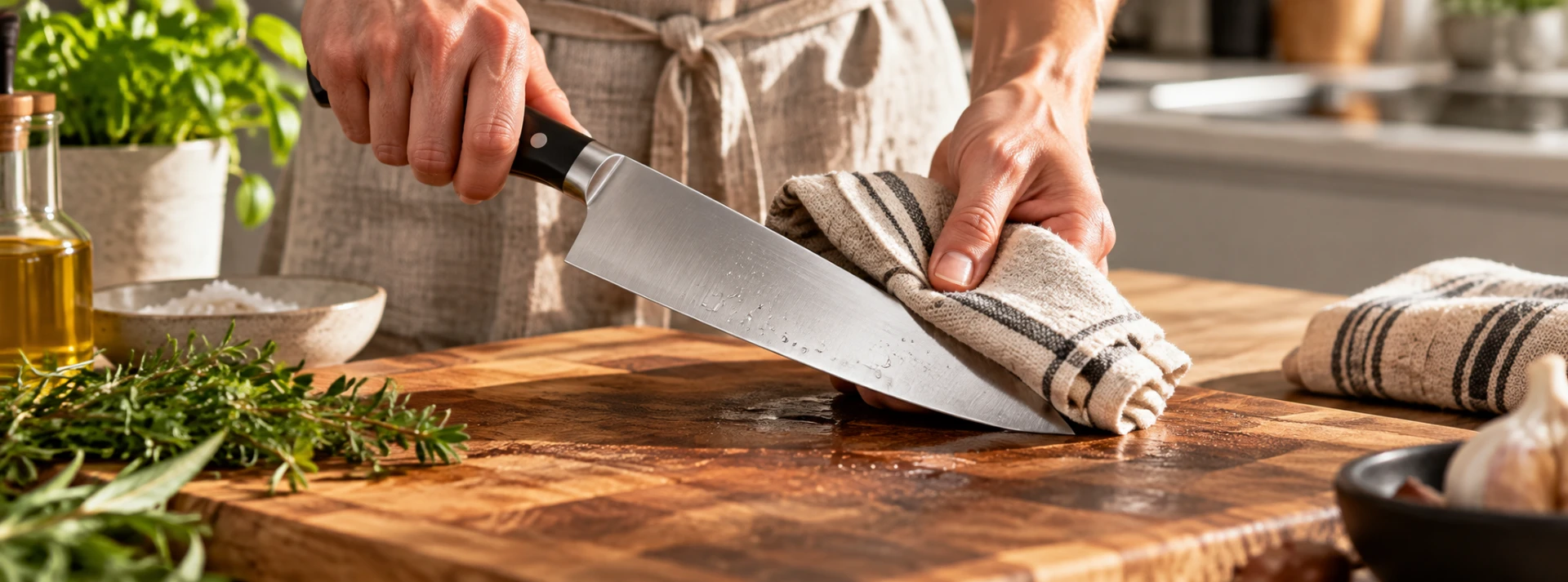
Dry the blade and handle with a clean tea towel straight after washing, paying attention to the bolster and the join between blade and handle, where water collects. Do not leave knives to air-dry in a dish rack. In humid coastal kitchens — Durban, Cape Town, Gqeberha — this single habit prevents most spotting and rust.
Choose the right cutting surface
Wood and good-quality plastic or composite boards are kind to an edge. End-grain wood is kindest of all.
Avoid glass, stone, marble, slate, ceramic and metal. They blunt or chip an edge in a few strokes — keep serving boards for serving.
Never cut directly on a plate, countertop or in a pan.
Put a damp cloth or non-slip mat under the board so it does not move while you cut.
Cutting habits that protect the edge
Scrape chopped food off the board with the spine, not the edge. Dragging the edge sideways rolls and dulls it quickly.
Use the right knife for the job: a bread knife for crusty loaves, a cleaver or heavy chopper for bones, and never a thin chef's knife or Japanese blade for frozen food, bones or hard squash rinds.
Let the knife do the work with a slicing motion rather than forcing it straight down or twisting it in the cut.
Do not use a knife as a can opener, screwdriver, pry bar or to split frozen blocks.
Safe storage
A loose knife in a cutlery drawer is bad for the edge and worse for fingers. Choose one of the following, and make sure the knife is clean and completely dry before it goes away.
Knife block: keeps edges protected and knives to hand. Slide the knife in on its spine rather than dragging the edge along the slot, and keep the block clean and dry.
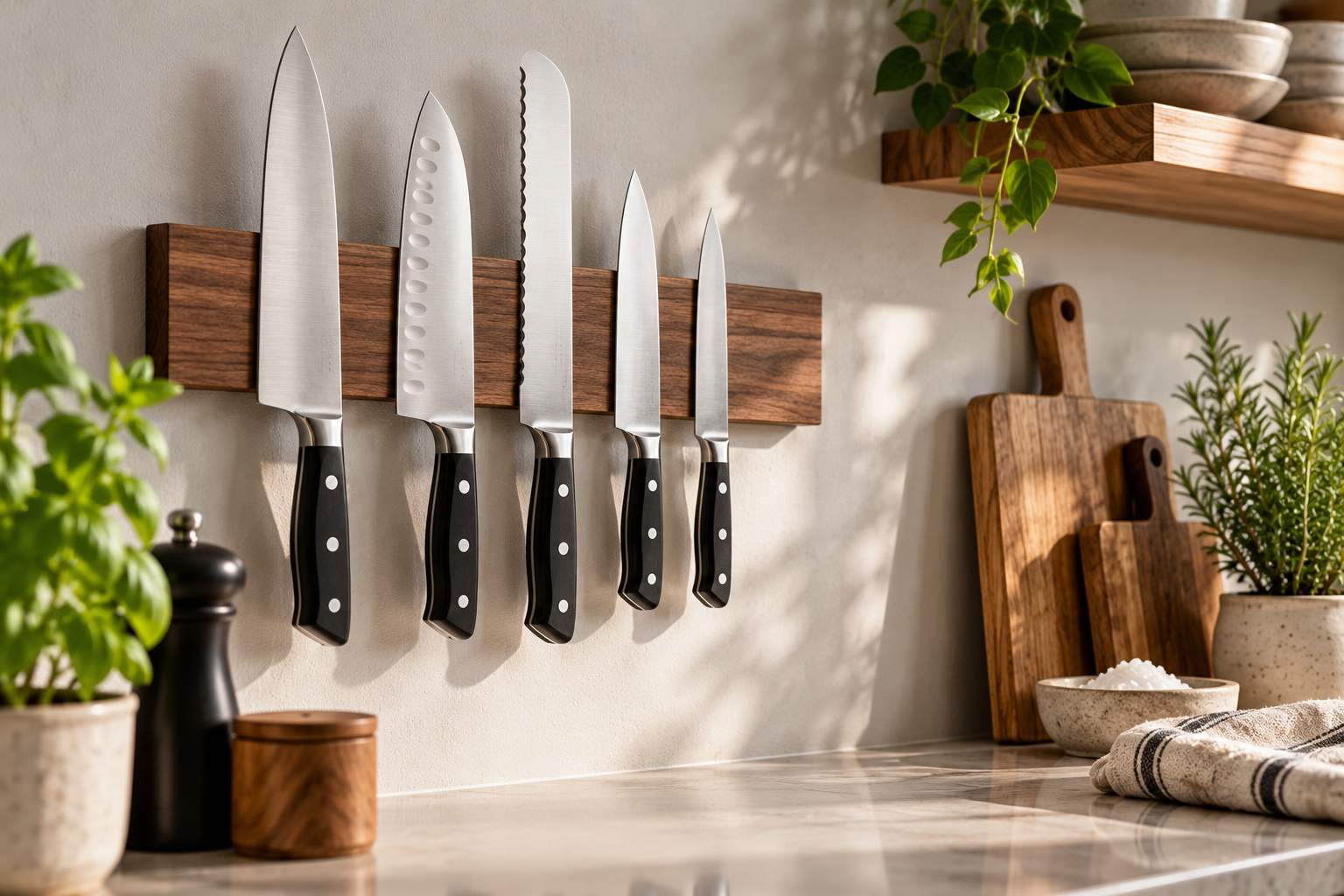
Magnetic strip: saves counter space and lets knives dry in air. Place the spine against the magnet first and roll the blade on, then lift off by the spine — never slide the edge across it. Mount it away from where children can reach.
In-drawer organiser: good for small kitchens; use a slotted insert that holds each blade separately.
Blade guards and knife rolls: essential if knives must share a drawer, travel to a braai or holiday house, or go to a cooking class.
A block or magnetic strip keeps edges apart. Return knives on the spine, not the edge.
Handle care
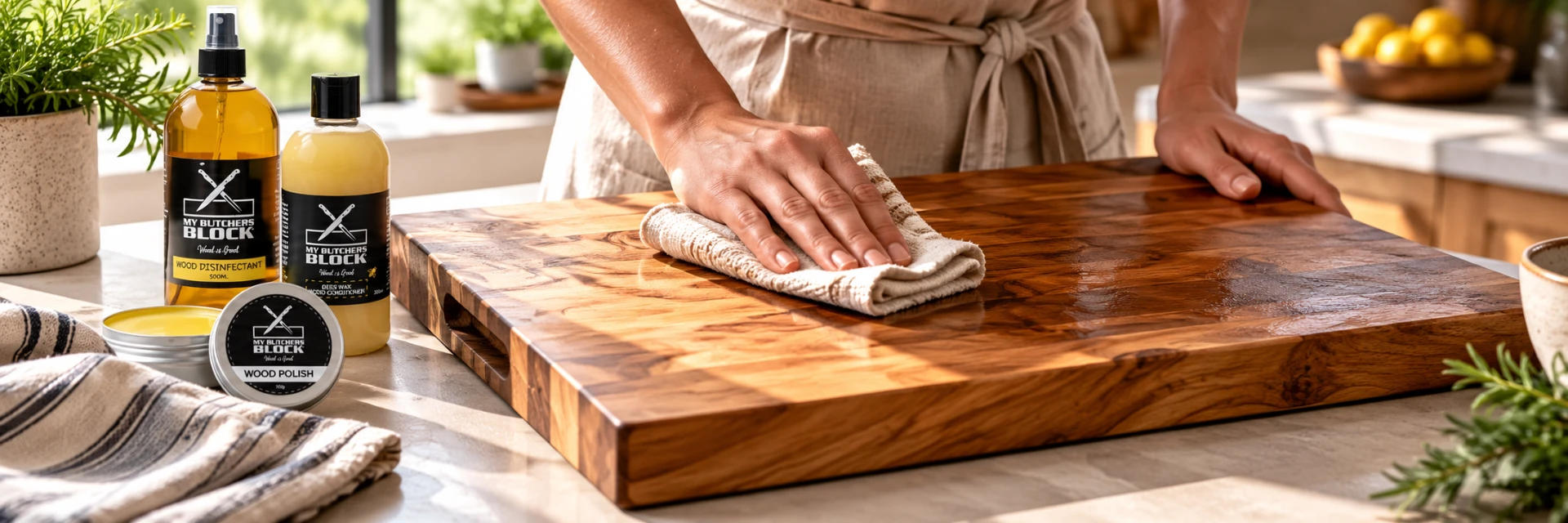
Wooden handles: wash quickly and dry at once. If the wood looks pale or dry, rub in a little food-safe mineral oil or board oil and wipe off the excess.
Synthetic and stainless handles need nothing beyond washing and drying, but check rivets and joins occasionally for trapped food.
A loose, cracked or wobbling handle is a safety problem. Stop using the knife and have it assessed or repaired.
Spots, stains and rust
Water spots and light marks: wipe with a cloth dampened with a little white vinegar or lemon juice, then wash, rinse and dry immediately.
Light surface rust: rub gently with a paste of bicarbonate of soda and water on a soft cloth or cork, following the direction of the blade finish. Wash and dry well.
Stubborn rust or pitting on a good knife is best left to a professional sharpener, who can refinish the blade without damaging the edge geometry.
Stainless steel is stain-resistant, not stain-proof. Salt, acids and standing water can still mark it.
Do and avoid
Do wash, dry and put knives away straight after use.
Do cut on wood or quality plastic boards.
Do hone regularly between sharpenings.
Avoid the dishwasher, the sink and the loose cutlery drawer.
Avoid glass, stone and ceramic cutting surfaces.
Avoid scraping food off the board with the edge.
Troubleshooting
Knife dulls within days: check the board, the storage and the scraping habit before blaming the steel.
Small chips along the edge: usually from bones, frozen food, a hard board or the dishwasher. Minor chips can be sharpened out; larger ones need a professional.
Tip bent or broken: often from prying or a drop. A professional sharpener can usually reshape the tip.
Handle rough or split: wood that has been soaked or dishwashed. Oil lightly; if split or loose, have it repaired or replace the knife.
When to hone, sharpen, repair or replace
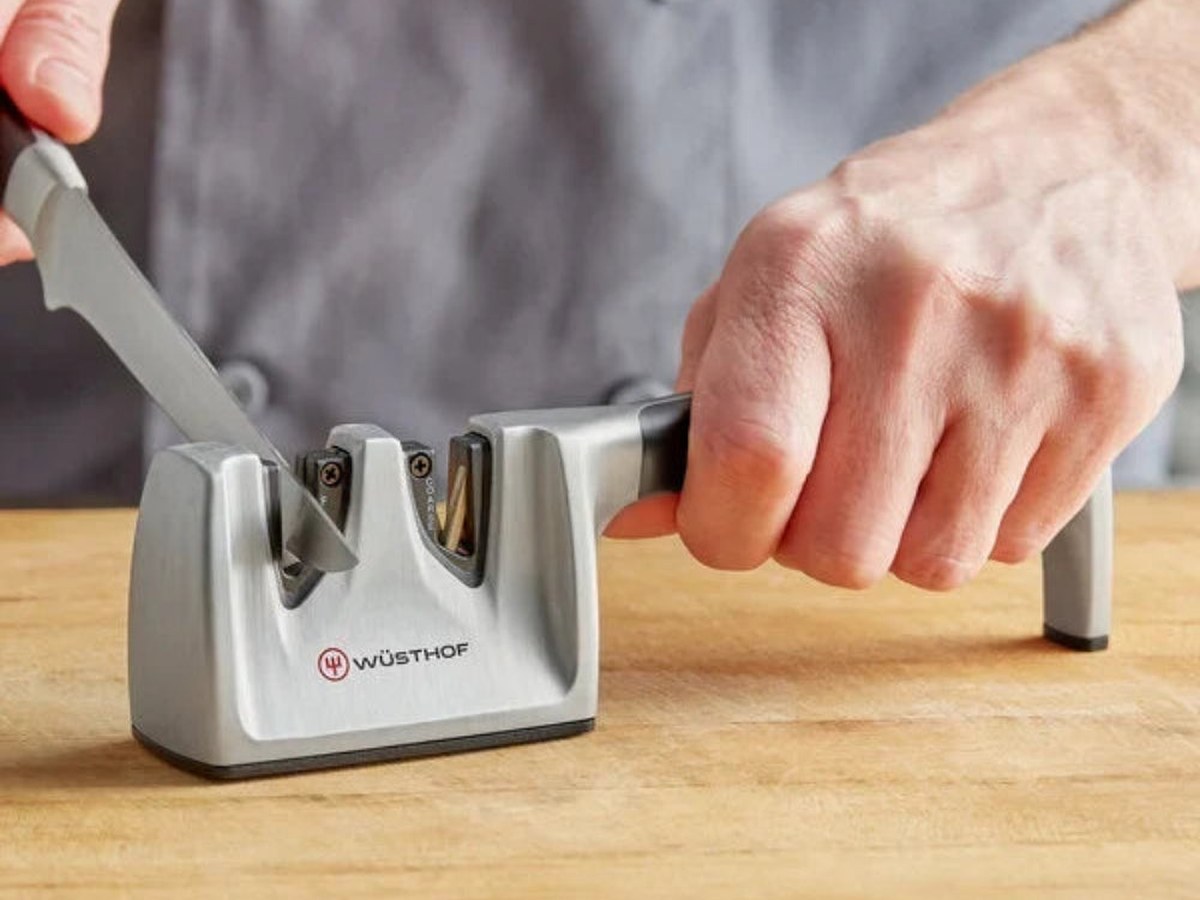
Hone when the knife still feels sharp but starts to slip on tomato skin; sharpen when honing no longer brings it back. Our guide to keeping knives sharp covers both in detail. Send a knife to a professional for large chips, a broken tip or rust pitting. Replace it when the blade is cracked, the handle cannot be made secure, or repeated sharpening has worn the blade so narrow that it no longer cuts safely.
Wash by hand, dry at once, cut on a kind surface, store edges apart — that is the whole routine, and it is what keeps a good knife in the kitchen for a lifetime.