
Buying Guides
Choosing a chef's knife
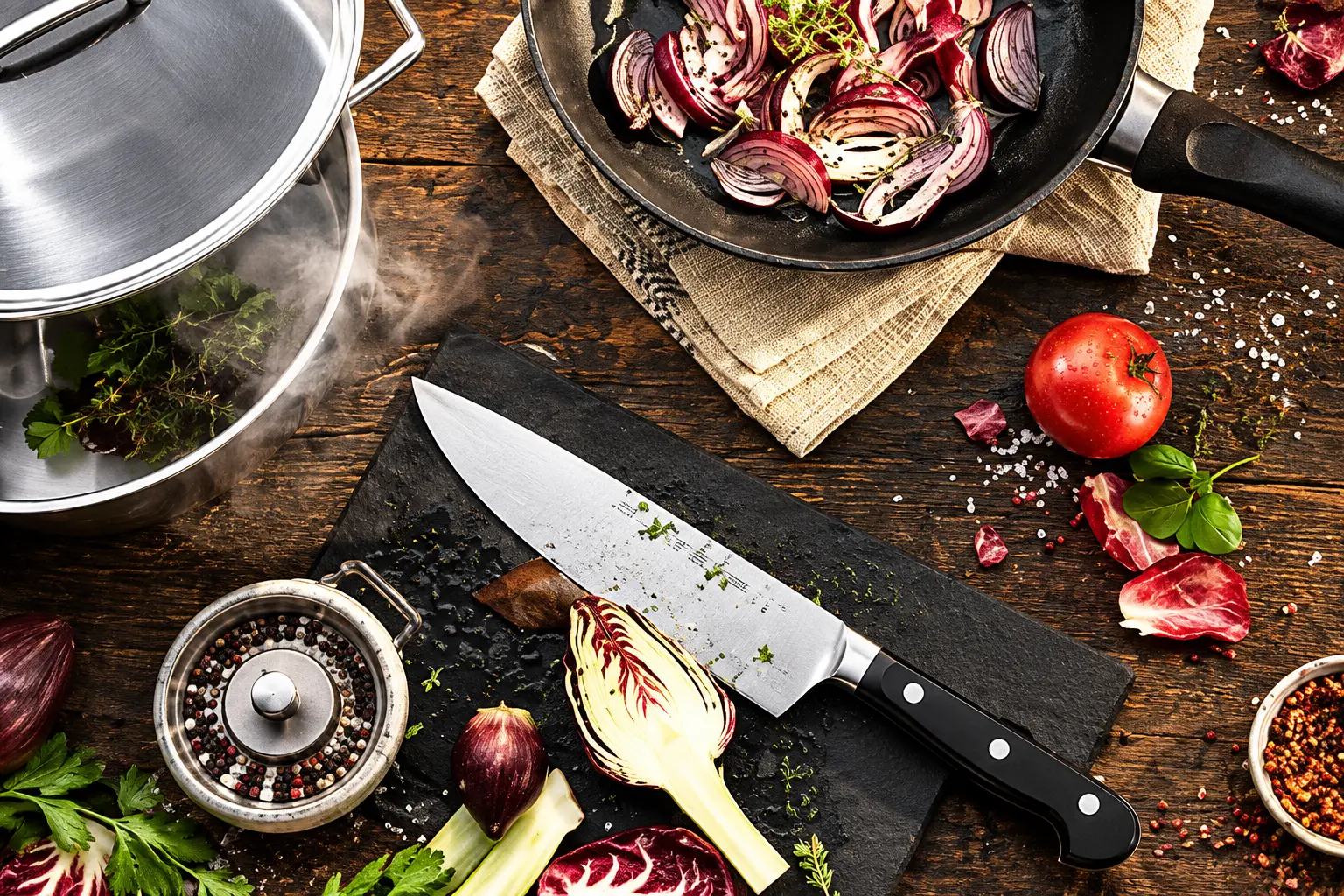
Length, steel, weight and handle — the four things that actually decide whether you reach for a chef's knife every day, and the ones that are mostly marketing.
Honing restores an edge that has rolled out of line. Sharpening creates a new one. Knowing which job is due keeps a knife safer and useful for longer.
By Cookin · 22 September 2026 · Updated 24 September 2026 · 4 min read

A sharp knife begins a cut where you place it. A dull one skids, crushes delicate food and makes you compensate with force. Edge care is not about chasing a razor finish every week; it is about recognising whether the fine edge has rolled out of alignment, worn away or been physically damaged, then choosing the least aggressive correction.
Use a simple paper check before doing anything. With dry hands and clear space, hold a sheet of ordinary paper away from your body and try to slice down from the edge. A knife that catches in one area but improves after a few light passes on a compatible honing rod probably had a rolled edge. If it tears along the full length, still struggles after honing, reflects light along the edge, or has visible chips, it needs sharpening or repair.
Check the knife maker’s recommended edge angle before starting. Many European chef’s knives sit around 20° per side and many thinner Japanese-style knives use a more acute angle, but construction varies. If the maker advises against a conventional steel, use the maintenance method specified for that blade.
There is no useful calendar rule because steel, board, technique and frequency of use all differ. Sharpen when honing no longer restores a clean, controlled cut. A whetstone offers control over angle and finish but takes practice. A compatible guided, water-wheel or electric unit makes angle control easier, although it may remove more metal. Before using any device, confirm that it suits the knife’s grind, bevel angle and blade material; serrated and single-bevel knives need specialist methods.
Professional sharpening is the sensible choice when the blade has chips, a broken tip, an uneven bevel, a hollow in the cutting line, or damage caused by an unsuitable sharpener. It is also safer for a valuable single-bevel knife or when you cannot identify the correct angle. Stop using a knife immediately if the handle is loose, the blade is cracked, or the steel has separated at the handle; sharpening cannot repair a structural fault.
Most quality kitchen knives can be sharpened for decades. Replace one when repair would leave too little blade for safe knuckle clearance, corrosion has created deep pits near the edge, the blade or tang is cracked, or a damaged handle cannot be repaired securely. A worn edge by itself is not a reason to discard a sound knife.
The maintenance loop is simple: use a forgiving board, work without twisting the blade, check the edge when cutting becomes less controlled, hone only when alignment is the issue, and sharpen only when fresh steel is needed. That preserves both the knife and the cook’s control.
Where to look next
Buying Guides
Length, steel, weight and handle — the four things that actually decide whether you reach for a chef's knife every day, and the ones that are mostly marketing.
How To
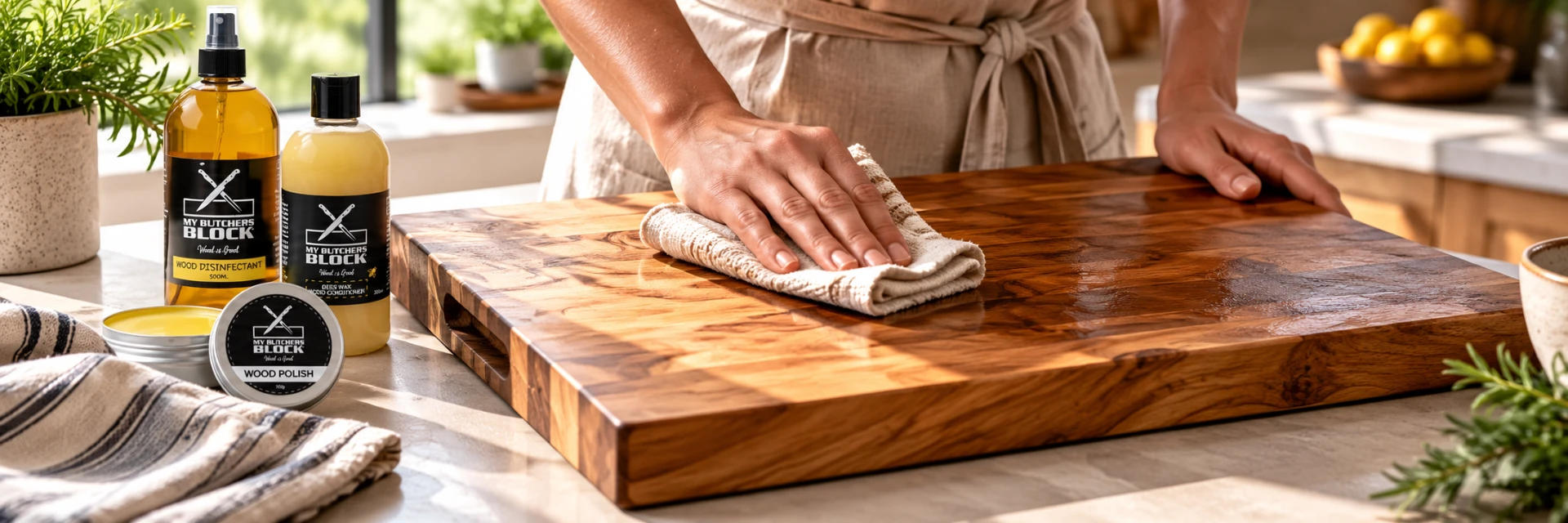
First-use preparation, everyday washing and drying, oiling, odour and stain removal, and the signs that a board has reached the end of its working life.

How To
Choosing the right glass for the job, washing and drying without clouding, avoiding thermal shock and chips, and storing glassware so rims and stems survive — a practical guide for South African homes.