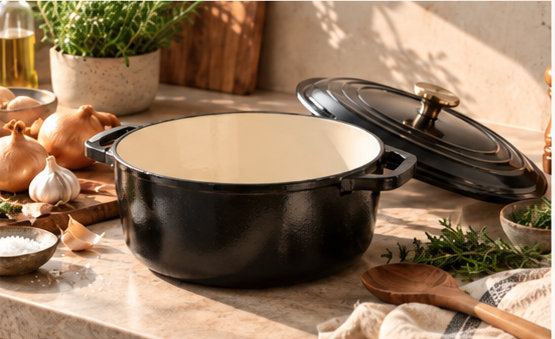
Cast iron is close to indestructible. What it needs is dry storage, a little oil and steady heat — and the patience to let the seasoning build.
By Cookin · 24 September 2026 · 7 min read
Cast iron rewards habit more than effort. A skillet, grill pan or potjie treated sensibly will outlast almost everything else in the kitchen, and even a badly neglected one can usually be brought back. What follows is general guidance for home cooks. Finishes and constructions differ, so where your cookware's own care instructions say something different, follow the manufacturer.
First, know which cast iron you have
Bare (raw or pre-seasoned) cast iron has a dark, slightly textured surface. Its non-stick quality comes from seasoning — thin layers of oil baked into a hard coating — and it will rust if left wet.
Enamelled cast iron is coated in glass enamel, often coloured outside and cream, black or matte black inside. It does not need seasoning and will not rust where the enamel is intact, but the enamel can chip if knocked or overheated empty.
Much of the advice below applies to both. Where it differs — seasoning, re-seasoning and rust — it is flagged.
Before first use
Remove labels and packaging, wash in warm soapy water, rinse and dry immediately and completely.
Bare cast iron: most pans are sold pre-seasoned and can be used straight away. For extra protection, warm the dry pan on low heat, wipe a very thin film of oil over every surface, then buff off as much as you can with a paper towel.
Enamelled cast iron: wash and dry. Some manufacturers suggest lightly oiling the interior of matte black enamel before first use; check your instructions.
Preheating and heat control
Cast iron heats slowly and unevenly, then holds that heat for a long time. Start on low to medium heat and give the pan five minutes or so to come up to temperature evenly before increasing it. Rushing a cold pan onto a high flame creates hot spots and, in extreme cases, can crack bare iron or craze enamel. Once hot, it rarely needs full heat — medium is enough for most searing.
Match the burner to the base. A pan much larger than the flame or plate will be hot in the middle and cool at the edge.
On induction and glass-ceramic hobs, lift rather than slide — the weight and rough base can scratch the glass.
Never heat enamelled cast iron empty on high heat; always have oil, fat or food in the pan.
Over coals or on a braai grid, raise or move the pan to control heat rather than dousing it with water.
Suitable fats and oils
For cooking, use whatever suits the dish — sunflower, canola, olive oil, butter, lard or beef dripping. For seasoning, choose a neutral oil with a reasonably high smoke point, such as sunflower, canola or grapeseed, and use far less than you think: a teaspoon or so, spread thin and buffed off, is enough for a 26–30cm pan. Thick layers do not cure properly and leave a sticky surface.
Cooking habits that build seasoning
Cook often. Frying, searing, roasting potatoes and shallow-frying all reinforce the seasoning on bare iron.
Expect a new or re-seasoned pan to stick a little with eggs and delicate fish. Build up with fattier cooking first.
Metal spatulas are fine on well-seasoned bare iron. On enamel, prefer wood, silicone or nylon to avoid marking the surface.
Avoid storing food in cast iron. Transfer leftovers to another container once cooked.
Acidic foods
Tomato sauces, wine braises, vinegar and citrus can strip young seasoning on bare cast iron and leave a metallic taste if cooked for a long time. A quick deglaze or a short simmer in a well-seasoned pan is usually fine; a long tomato-based bredie is better made in enamelled cast iron, which is unaffected by acidity.
Cleaning
Clean while the pan is still warm but not hot. Let it cool enough to handle before it meets water — sudden cold can crack iron or damage enamel.
Wipe out excess fat, then wash with hot water and a brush or non-scratch sponge. A small amount of mild dishwashing liquid will not harm established seasoning.
For stuck-on food, add a little water, bring to a simmer for a few minutes, then scrape gently with a wooden spatula. Coarse salt and a little oil make a gentle scrub for bare iron.
Avoid steel wool and abrasive powders on enamel. On bare iron, reserve them for rust removal.
Keep cast iron out of the dishwasher unless the manufacturer explicitly says otherwise — it strips seasoning and dulls enamel.
Soaking limits
Do not leave bare cast iron to soak. Even an hour in the sink can start rust, and overnight will almost certainly do so. Enamelled cast iron tolerates a short soak in warm soapy water — up to about thirty minutes — to loosen residue, but exposed cast-iron rims should still be dried promptly.
Drying and oiling
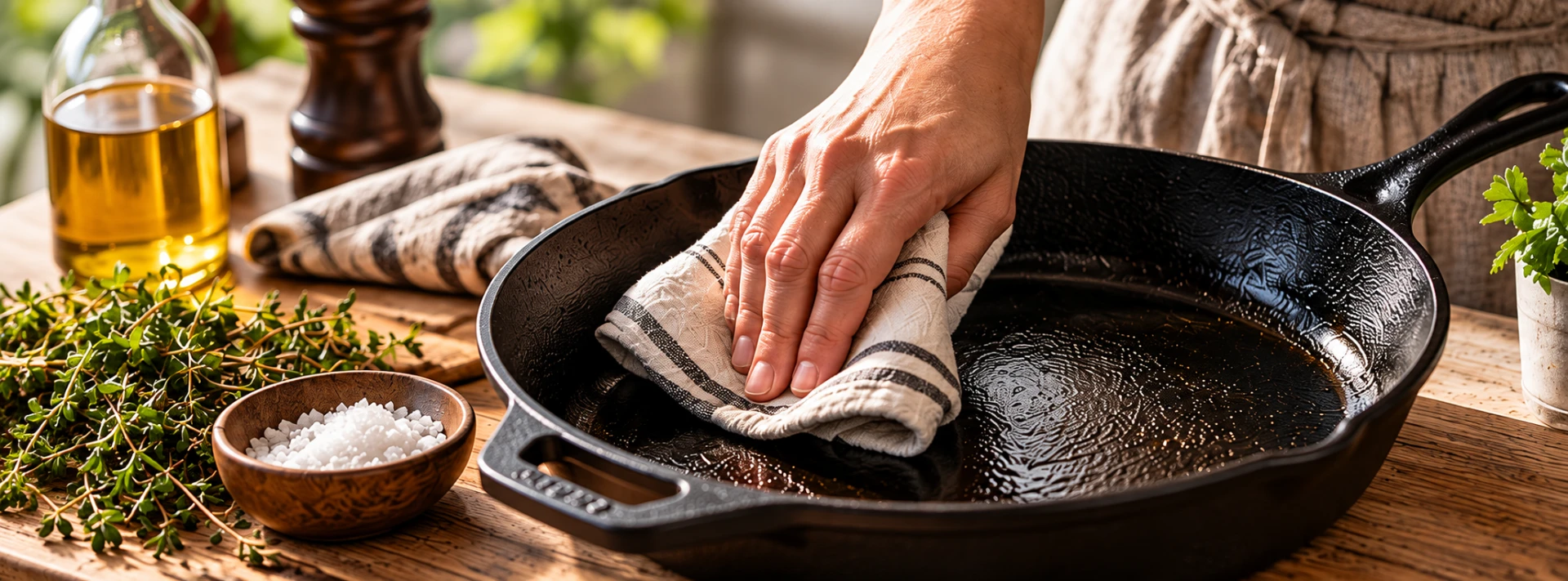
Dry immediately with a towel, then return bare cast iron to low heat for a minute or two to drive off the last moisture. While it is warm, wipe on a few drops of oil and buff until the surface looks dark and satin rather than wet. On enamelled pans, dry well, paying attention to any unenamelled rim.
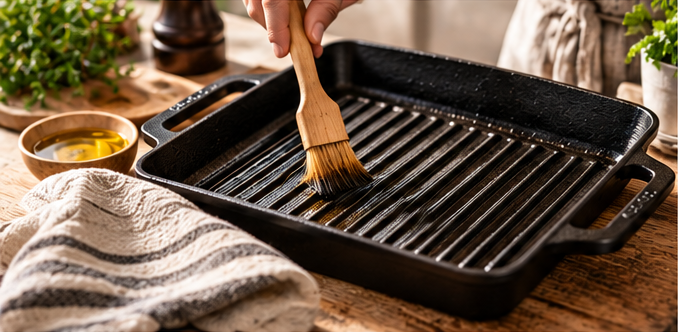
Ridged grill pans need the same routine — a brush gets between the ridges, and a thorough dry keeps rust out of the channels.
Re-seasoning bare cast iron
When food starts sticking, the surface looks patchy grey, or after rust removal, re-season in the oven. Wash and dry thoroughly, warm the pan, then rub a very thin layer of neutral oil over every surface — inside, outside and handle — and buff off the excess. Place upside down on the middle rack of an oven at around 230–250°C (or as your manufacturer recommends), with a tray below to catch drips, for about an hour. Switch off and let it cool in the oven. Two or three rounds give a harder, more even finish. Ventilate the kitchen; there will be some smoke.
Rust: prevention and removal
Prevention: dry immediately, heat-dry, oil lightly, and store somewhere dry. Coastal humidity in Durban or Cape Town makes this especially important.
Light surface rust on bare iron: scrub with steel wool or a stiff brush and a little water until back to grey or black iron, rinse, dry on the heat and re-season.
Heavier rust: a soak of no more than an hour in equal parts white vinegar and water can loosen it; check often, scrub, rinse thoroughly, dry at once and re-season fully, as vinegar will also remove seasoning.
Enamelled cast iron: rust usually only appears on the exposed rim. Dry it well and wipe on a little oil occasionally.
Storage
Store cast iron dry, with airflow. If stacking, put a paper towel or cloth between pans to absorb moisture and protect enamel from chipping. Keep lids off or propped slightly open so trapped humidity does not cause rust or stale odours. A potjie or Dutch oven left in a garage between braais benefits from a light coat of oil and a paper towel inside.
Do and avoid
Do preheat gradually and cook on moderate heat.
Do dry immediately and oil bare iron lightly after washing.
Do use enamelled cast iron for long acidic braises.
Avoid soaking bare iron or putting cast iron in the dishwasher.
Avoid plunging a hot pan into cold water.
Avoid heating enamelled cast iron empty or dropping it on hard floors.
Troubleshooting
Sticky or tacky surface: too much oil was left on during seasoning. Heat in the oven for another hour, or scrub and re-season with thinner coats.
Black flakes in food: carbonised residue or loose seasoning. Scrub back with salt and oil or a brush, then re-season.
Food sticks badly: the pan may be under-heated, or the seasoning is thin. Preheat longer and cook fattier dishes for a while.
Metallic taste: usually acidic food or thin seasoning on bare iron. Re-season and move acidic dishes to enamel.
Stained enamel interior: simmer water with a spoonful of bicarbonate of soda for a few minutes, then wash. Staining is typically cosmetic.
Restore or replace?
Bare cast iron can almost always be restored: rust, sticky seasoning and neglect are all fixable with a scrub and a re-season. Replace it only if it is cracked, badly warped so it rocks on a flat surface, or deeply pitted. Enamelled cast iron is different — once the interior enamel is significantly chipped, cracked or crazed, it cannot be repaired at home, and exposed iron beneath can rust and trap food. Small exterior chips are cosmetic; a damaged cooking surface is a reason to consult the manufacturer's warranty or replace the piece.
Steady heat, a quick wash, a thorough dry and a whisper of oil — keep to that, and cast iron simply gets better with use.