
Buying Guides
Stainless, non-stick or cast iron
What each cookware material is genuinely good at, where it fails, and the three-pan combination that covers almost every kind of home cooking.
The heaviest thing in the kitchen and, for a lot of cooks, the most used.
By Cookin · 22 September 2026 · 2 min read
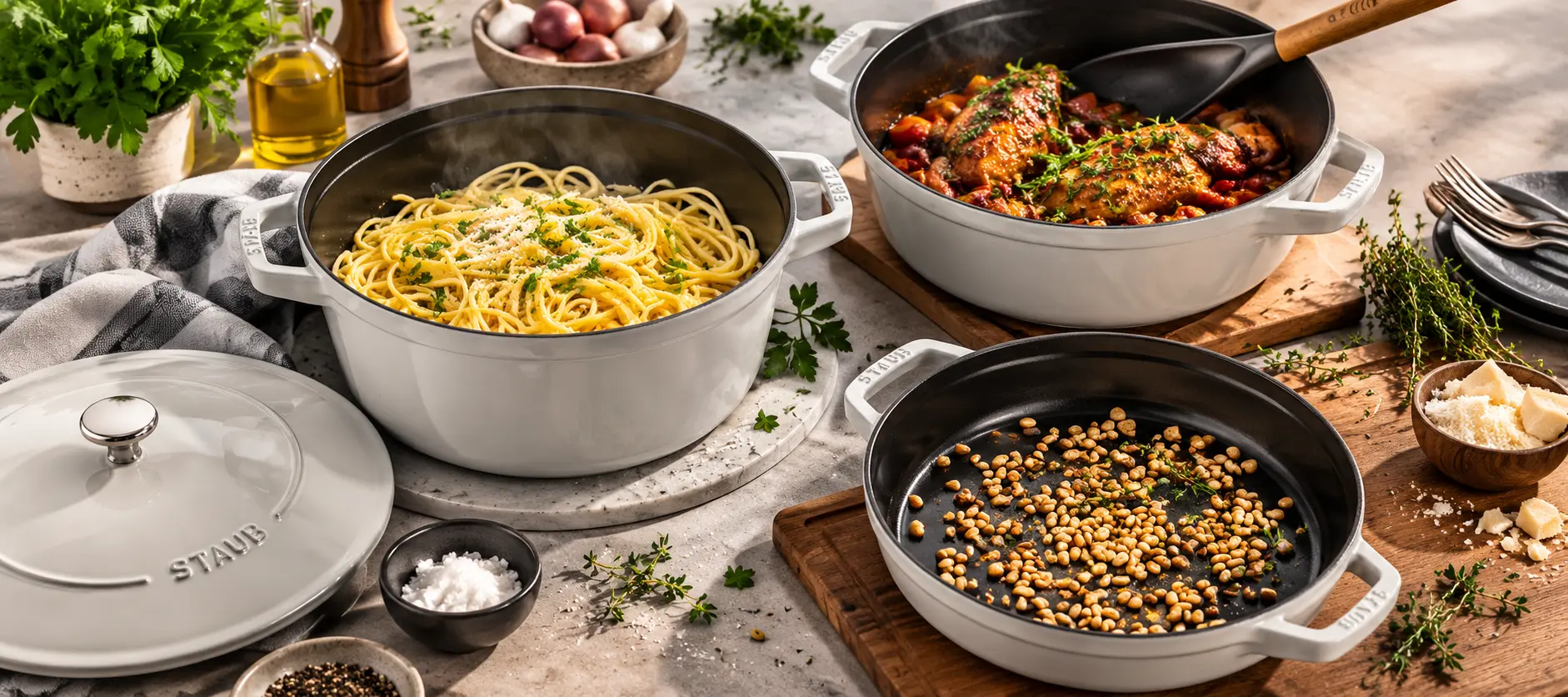
A cast iron casserole is the pot people inherit. It goes from hob to oven to table, it browns and braises and bakes bread, and unlike almost everything else in a kitchen it does not wear out. Which makes the buying decision worth getting right the first time.
Casseroles are sold by volume and the temptation is to buy the biggest one. Resist it. A pot that is too large for the food in it means the liquid spreads thin and reduces too fast, and you lose the gentle, self-basting braise that is the whole point.
Round is the more efficient shape. It matches a hob burner, heats evenly and is easier to stir. Oval suits long things — a leg of lamb, a whole fish, a rolled joint — but on a round burner the ends run cooler. If you are buying one pot, buy round.
Enamelled cast iron needs no seasoning, will not rust, and is indifferent to acidic ingredients. That makes it the sensible default for tomato-based stews, wine braises and anything long and wet. Bare cast iron needs seasoning and care, but it takes higher direct heat and develops a natural non-stick surface over years.
A light-coloured interior enamel is quietly useful: you can see how dark your fond is getting, which matters when you are building flavour.
Bought once and treated sensibly, this is genuinely a lifetime pot.
Where to look next
Buying Guides
What each cookware material is genuinely good at, where it fails, and the three-pan combination that covers almost every kind of home cooking.
How To
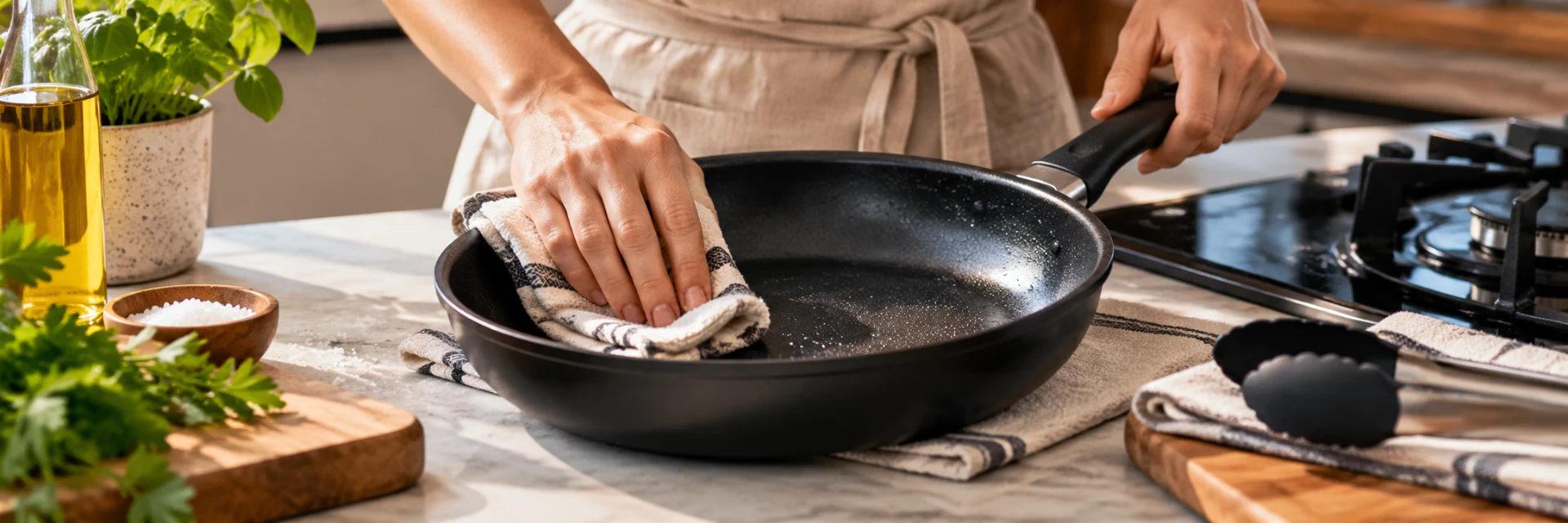
First use, heat control, utensils, cleaning, storage and the honest signs that a coating is finished — a practical guide to making non-stick cookware last.
How To
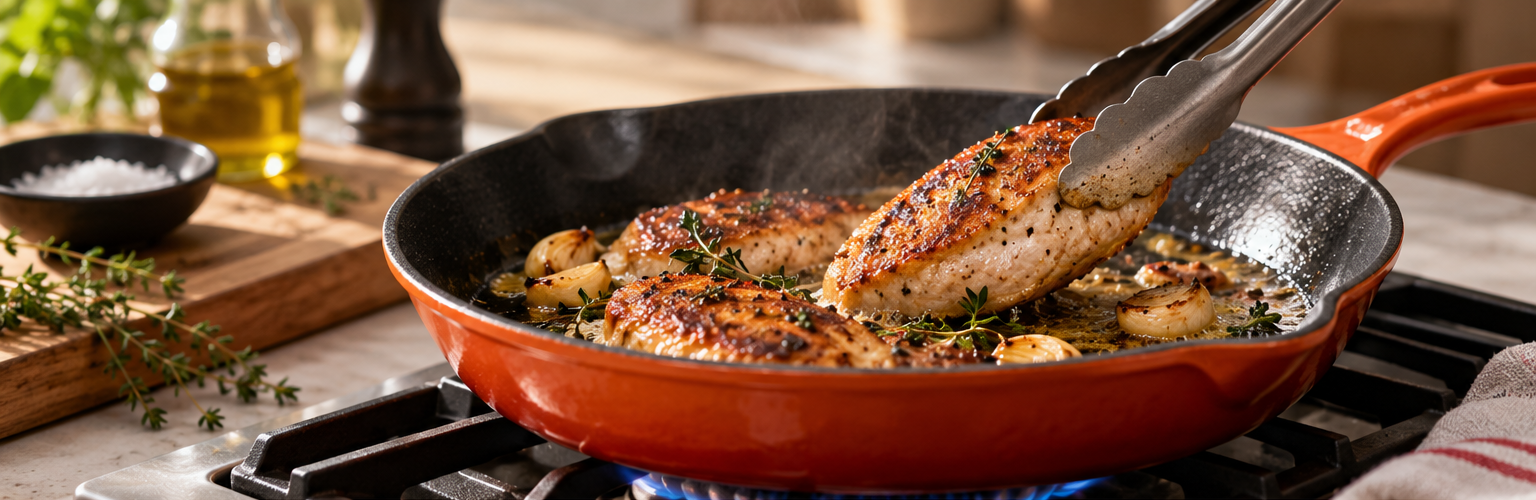
Why food sticks, scorches or stays pale — and how to control preheating, oil, crowding, heat recovery and deglazing in stainless steel, cast iron and non-stick pans.