Buying Guides
Choosing a chef's knife
Length, steel, weight and handle — the four things that actually decide whether you reach for a chef's knife every day, and the ones that are mostly marketing.
No knife type is best for everyone. What matters is what you cook, how you cut and which jobs one good blade can't do. Here is how the five knives worth knowing differ.
By Cookin · 24 September 2026 · 5 min read
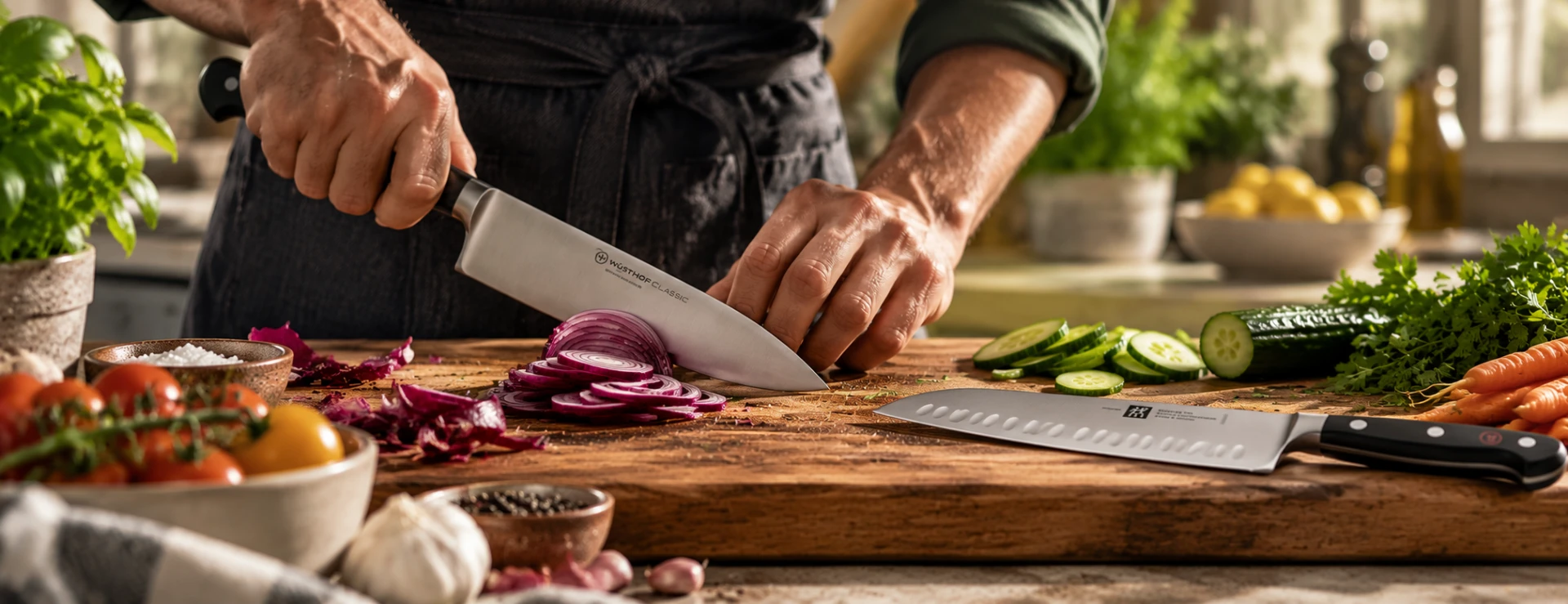
Most home cooks need fewer knives than a block suggests, but they do need the right ones. A chef's knife and a santoku do much the same job in different ways. A paring knife, a bread knife and a carving knife each handle things a large all-purpose blade does badly. This guide explains how the five differ and helps you decide which ones earn a place in your kitchen. There is no single best knife type: fit depends on what you cook, how often and how you like to cut.
If you have already decided on a chef's knife and want help with length, steel, weight and handle, our guide to choosing a chef's knife covers that in detail. This article looks at the wider set.
A chef's knife has a pointed tip and a blade that curves up from heel to tip. That curve lets you rock the blade on the board, keeping the tip down while the heel rises and falls, which suits mincing herbs, garlic and onions quickly. The heel is deep enough for firm vegetables and the tip is fine enough for detail. Common home lengths are roughly 16 to 20 cm.
Choose one if you cook a broad mix of meat and vegetables, like a rocking motion, or want the knife most recipes and technique videos assume you are using.
A santoku is a Japanese-style all-purpose knife, usually around 16 to 18 cm. Its edge is flatter than a chef's knife and the spine curves down to a rounded, less pointed tip, often called a sheep's-foot tip. The flat edge makes full contact with the board, so it suits straight-down chopping and forward push cuts rather than rocking. Many santokus have hollow or fluted scallops along the blade; these can help thin slices of potato or cucumber fall away, though they don't stop sticking entirely.
Choose one if you mostly prepare vegetables, prefer a shorter and often lighter blade, or find the rocking motion awkward. A santoku is a genuine alternative to a chef's knife, not an extra you must also own. Handles and steels vary widely across makers, so weight and balance differ from one santoku to the next.
A paring knife is usually 8 to 10 cm. It is for work done in the hand or on a small area of the board: peeling, hulling strawberries, trimming beans, deveining prawns, scoring, and taking the eyes out of potatoes. A big knife can do some of this, but it is clumsy and less safe held in the air.
Straight-edged paring knives give cleaner control for peeling and trimming. Serrated versions handle tomatoes and citrus skins well but are harder to sharpen at home. Most cooks find a paring knife is the second knife they use most.
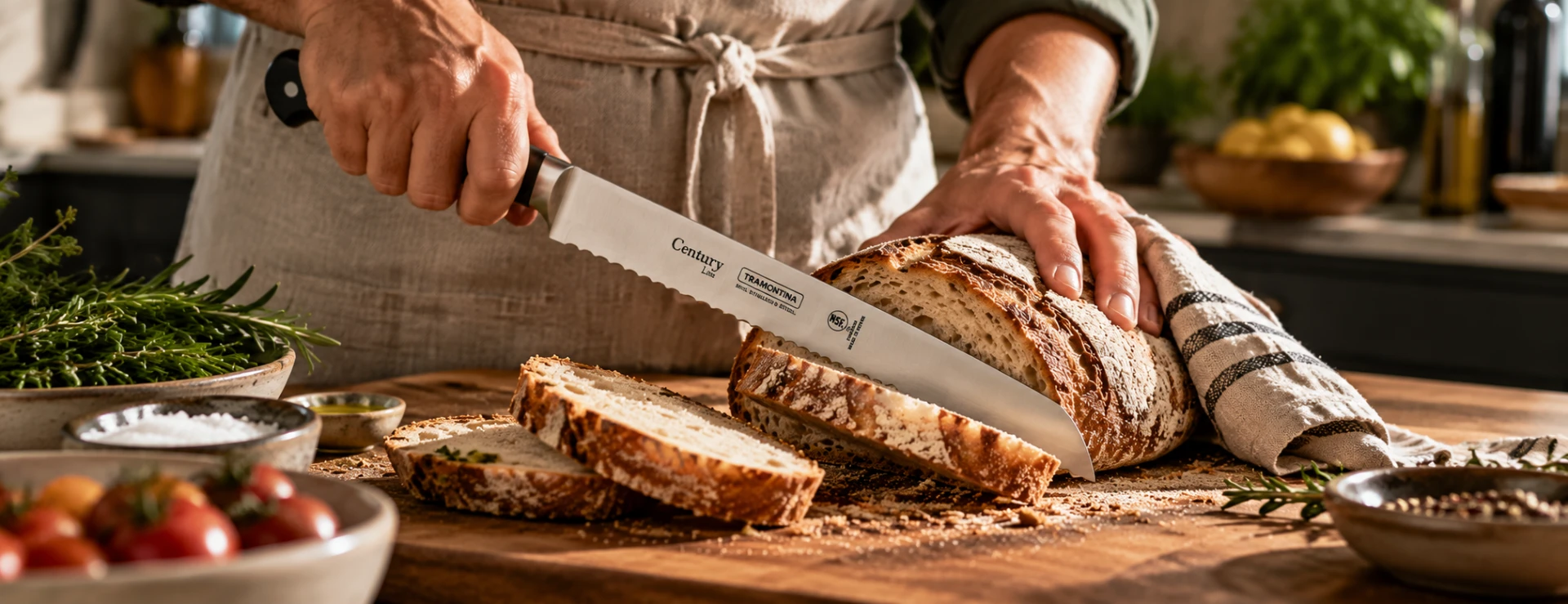
A bread knife has a long serrated edge, typically 20 to 23 cm, so it can cut through a crusty loaf without flattening the soft crumb. Use a gentle sawing motion and let the teeth do the work. The same edge handles large tomatoes, pineapple, layered cakes and other items with a firm outside and soft inside. Choose a blade longer than the widest loaf you usually buy or bake.
Serrated edges stay useful longer than plain edges but can't be sharpened on most standard sharpeners. Many owners have them professionally sharpened or replace them when they stop cutting cleanly.
A carving knife is long and narrow, usually around 20 to 25 cm, with a pointed tip for working around bones and joints. Slicing knives are similar but often with a rounded tip, sometimes longer, for boneless meat, gammon and salmon. The narrow blade creates less drag, and the length lets you make each slice in one long stroke instead of sawing, so slices come out thinner and neater.
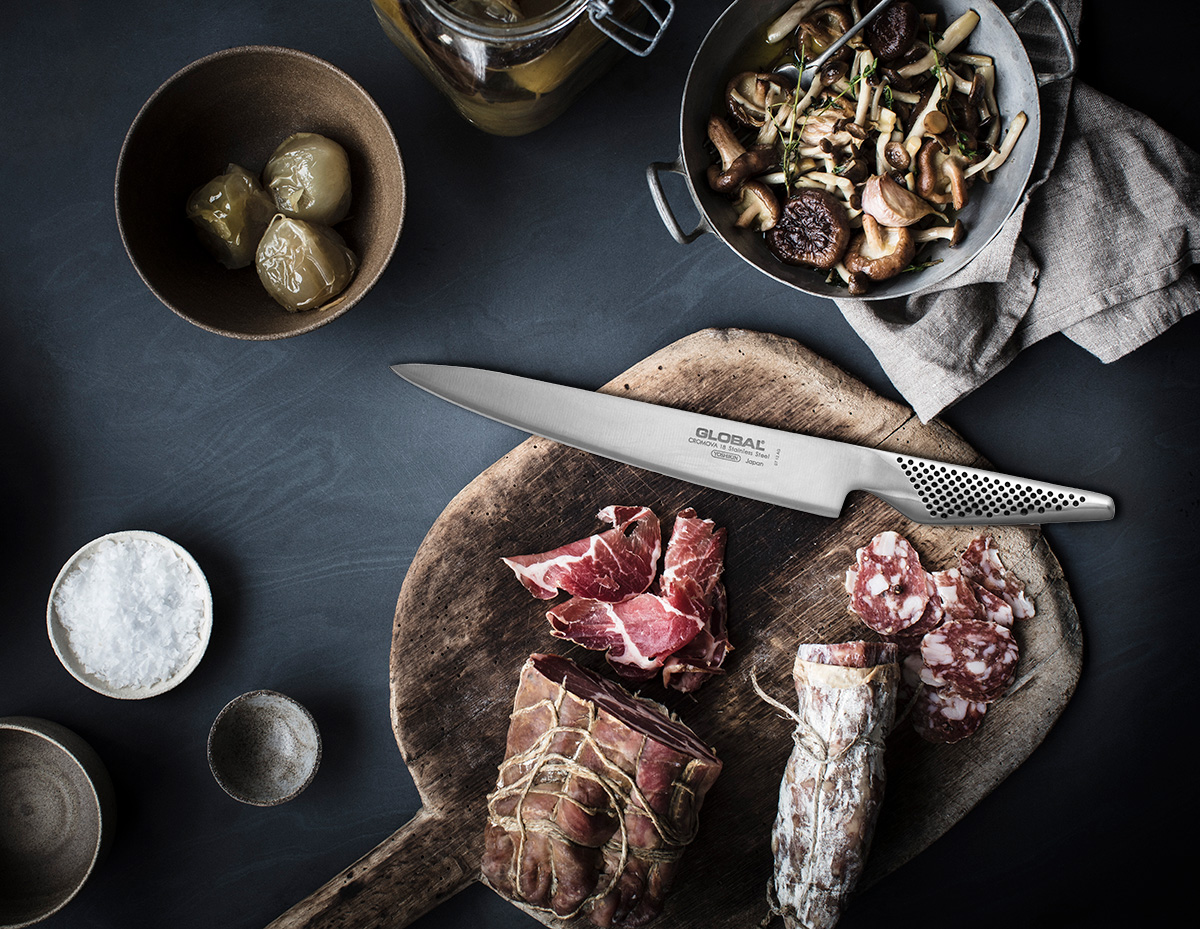
Choose one if you regularly roast whole chickens, joints, leg of lamb or gammon, or serve large pieces of cooked meat at the table. If you roast only occasionally, a sharp 20 cm chef's knife will manage.
Whichever type you choose, hold it the way you will use it before buying if you can. Pinch the blade just ahead of the handle between thumb and forefinger and wrap your other fingers around the handle. Your knuckles should clear the board when the edge is flat on it. Heavier forged knives carry more momentum through dense food; lighter stamped knives feel quicker and are less tiring for long prep. Neither is better. What matters is that the knife feels balanced and secure when your hands are wet.
One good chef's knife or santoku will handle most everyday cooking. Pick the one whose cutting style suits you; you don't need both. The gaps it leaves are predictable. Small work in the hand needs a paring knife. Crusty bread needs a serrated edge. Regular roasts benefit from a carving knife. For most kitchens, a chef's knife or santoku, a paring knife and a bread knife cover almost everything. Add a carving knife if you roast often.
Where to look next
Buying Guides
Length, steel, weight and handle — the four things that actually decide whether you reach for a chef's knife every day, and the ones that are mostly marketing.
How To
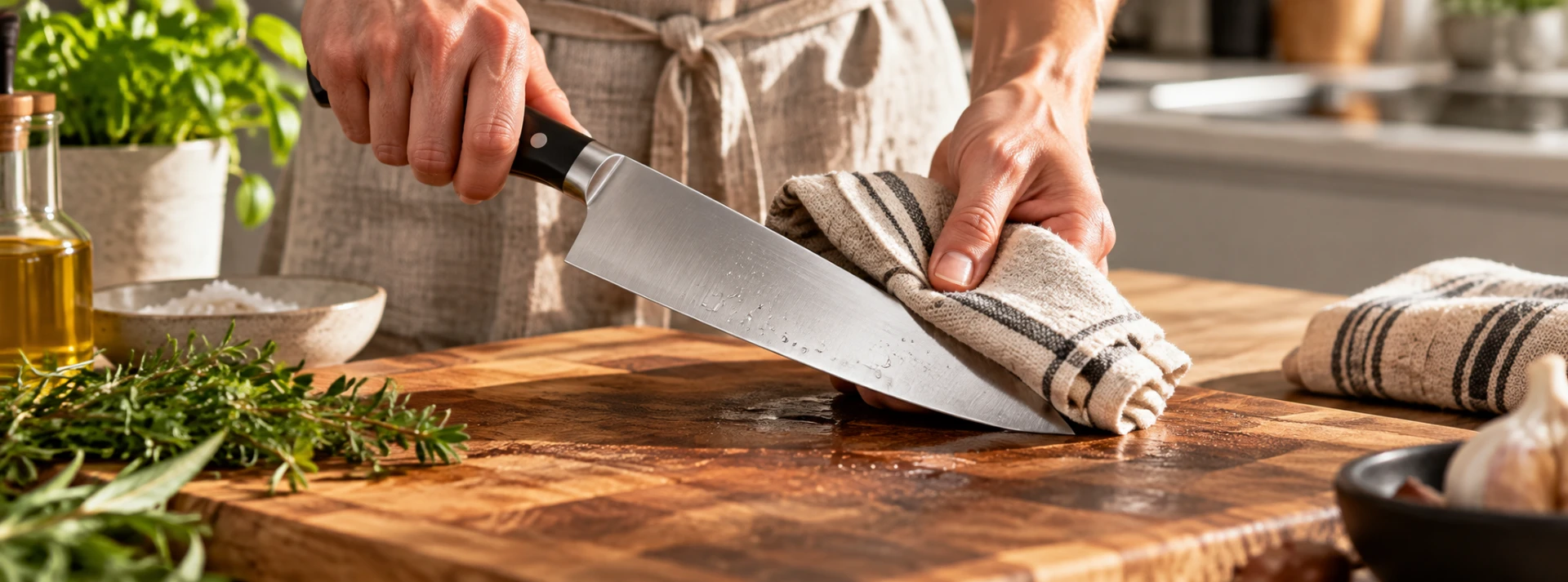
Washing, drying, cutting surfaces, safe storage, rust and stains, and the habits that protect an edge — a practical daily-care guide for kitchen knives.
How To
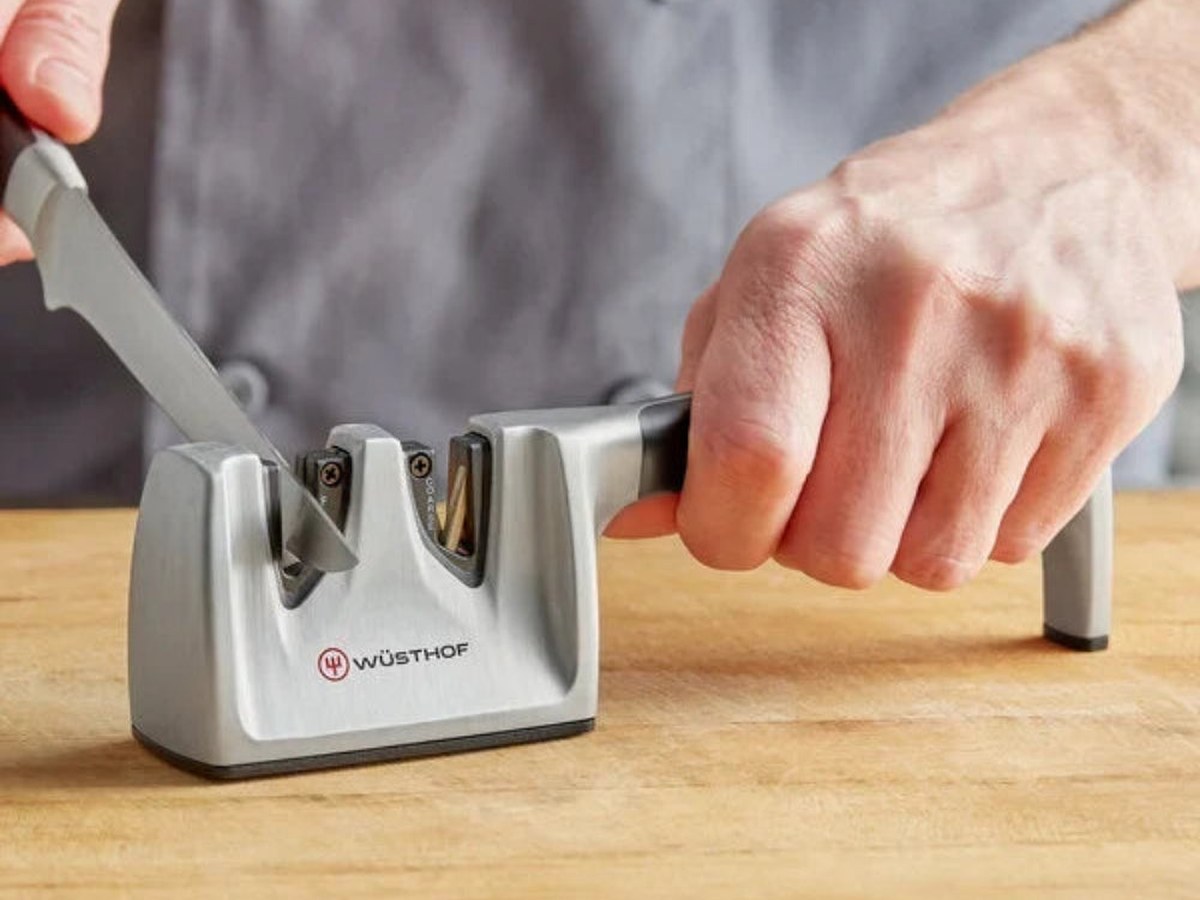
Learn when to hone or sharpen a kitchen knife, how to use a honing rod safely, which common habits damage an edge, and when to call a professional.

Buying Guides
A short, honest equipment list for a first flat, a self-catering rental or an Airbnb kitchen — what to buy well, what to buy cheaply, and what to skip entirely.