
How To
How to use and care for a moka pot
First use, hot water, a level basket, gentle heat and an early stop — plus cleaning, drying, gaskets, storage and troubleshooting for a stovetop moka pot.
Good coffee at home comes down to a handful of variables you can control: grind, dose, water and time. Change one at a time and let the cup tell you what to do next.
By Cookin · 26 September 2026 · 4 min read
Brewing coffee is extraction: water dissolves flavour from ground beans, and how much it dissolves depends on how finely the coffee is ground, how much coffee meets how much water, how hot that water is and how long they stay in contact. Every brew method is simply a different way of balancing those variables. Once you understand them, you can make any brewer taste better — and work out why a cup went wrong.
Finer grounds expose more surface area, so water extracts flavour faster. They also slow water down, which lengthens the brew. Coarser grounds extract more slowly and let water pass more quickly. That is why each method has its own grind range: a short, pressurised brew needs finer coffee; a long steep needs coarser coffee.
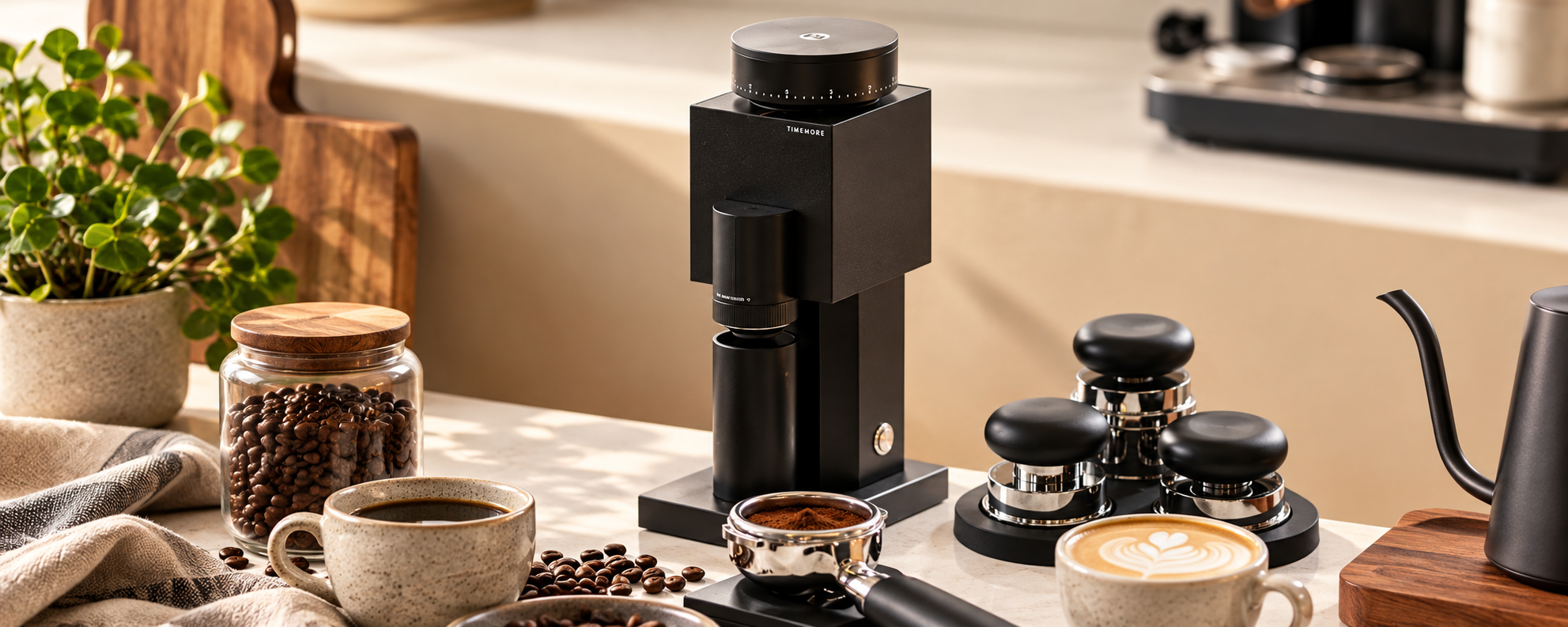
Consistency matters as much as size. Blade grinders chop unevenly, leaving dust that over-extracts beside chunks that under-extract, so the cup can taste bitter and sour at once. A burr grinder crushes beans to a more even size, which makes every other adjustment easier to judge. Grinding just before brewing also keeps more aroma in the cup.
Ratio controls strength. For pour-over and French press, a common starting range is about 1 g of coffee to 15–17 g (or ml) of water — for example, 15 g of coffee to roughly 250 ml of water. Treat this as a place to begin, not a correct answer: beans, roast and personal taste all move it. A moka pot works differently because the basket and water chamber set the dose; fill the basket level and the water to just below the valve.
Weighing coffee and water with a scale is the simplest way to make a good cup repeatable. Scoops vary with roast and grind, so a cup you liked yesterday is hard to recreate from volume alone. Once you have a reliable dose, change ratio in small steps and note what you did.
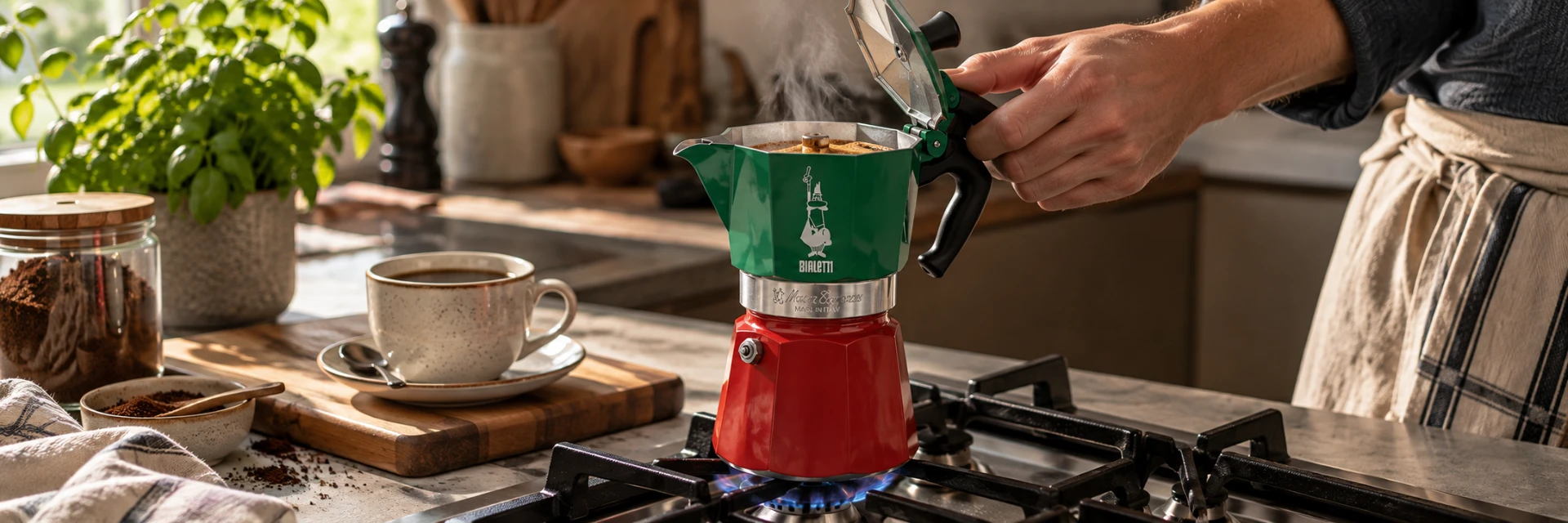
A moka pot pushes water up through the coffee using steam pressure from the base, producing a short, strong, heavy-bodied brew. It is quick and suits people who like intense coffee or milk drinks. Heat and grind are the main controls; the step-by-step method and care are covered in our moka pot guide, so they are not repeated here.
Pour-over lets water flow through a bed of coffee and a paper filter. The filter holds back oils and fine particles, giving a lighter, cleaner cup where the character of the beans comes through clearly. It rewards attention: grind, pouring speed and ratio all show up in the taste.
A French press steeps coffee fully in water, then separates it with a metal mesh. Oils and some fine particles pass through, so the cup is fuller and richer, with a little sediment at the bottom. It is forgiving and easy to scale for several people. None of these methods is better overall — they produce different styles of coffee.
When a cup is not right, change a single variable and brew again. Grind is usually the first lever for flavour balance; ratio is the lever for strength. If you change grind and dose together, you will not know which one helped.
Coffee loses aroma after roasting, and faster once ground. Buy amounts you will use within a few weeks, keep beans in an airtight, opaque container away from heat, light and humidity, and grind only what you need for each brew. Avoid storing an open bag next to the stove or kettle, where warmth and steam speed up staling.
Where to look next
How To
First use, hot water, a level basket, gentle heat and an early stop — plus cleaning, drying, gaskets, storage and troubleshooting for a stovetop moka pot.
Buying Guides
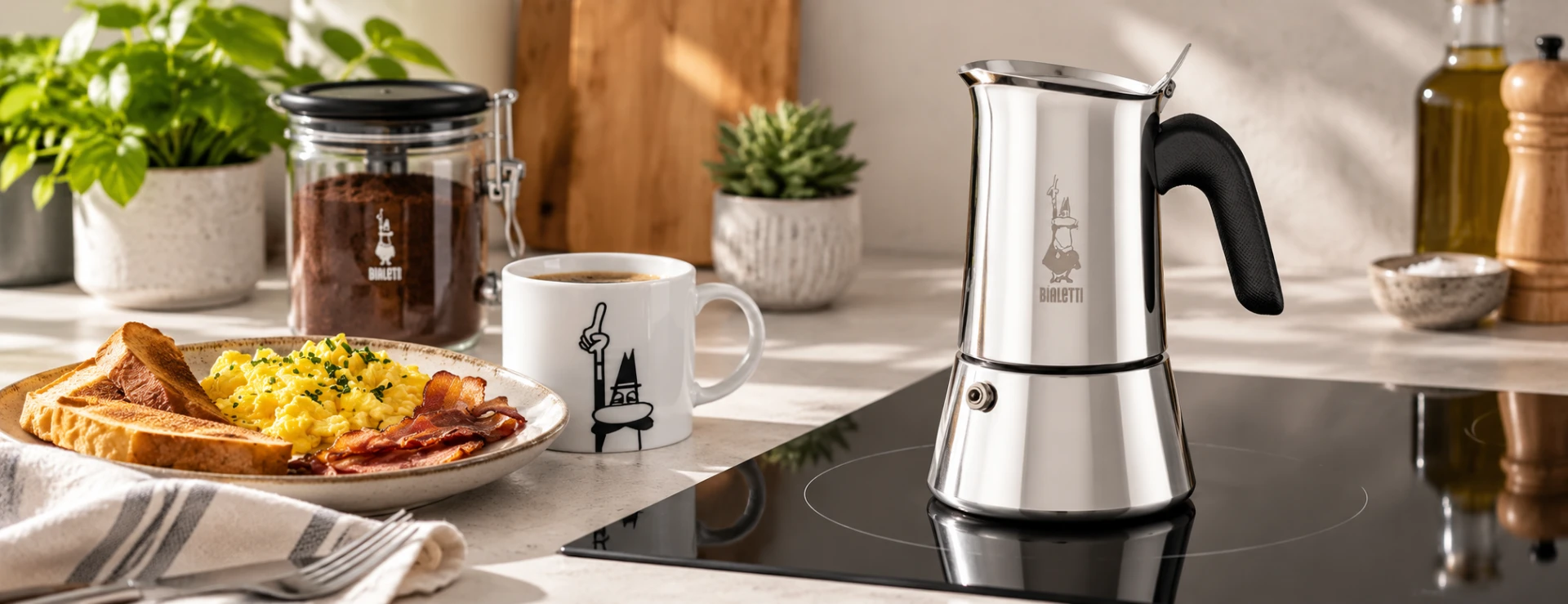
How moka-pot cup sizes translate into a real serving, when aluminium or stainless steel makes sense, and what to check for gas, electric, ceramic and induction hobs.

Buying Guides
A short, honest equipment list for a first flat, a self-catering rental or an Airbnb kitchen — what to buy well, what to buy cheaply, and what to skip entirely.